
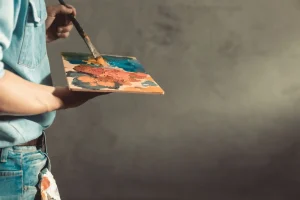
The 20th century marked one of the most transformative periods in the history of visual arts, reshaping how humans perceive creativity, expression, and society itself. Modern art is not simply a series of styles; it is a reflection of cultural, social, and technological shifts that challenged centuries of tradition. From the post-impressionist brushstrokes that conveyed emotion more than realism, to the conceptual and postmodern experiments that questioned the very definition of art, modern art evolution illustrates the human desire to innovate, provoke, and redefine norms. By exploring the trajectory of these movements, we can understand not only the artistic breakthroughs but also the broader societal transformations that influenced them. Art became a mirror to humanity, reflecting its anxieties, triumphs, and the constant search for meaning in an increasingly complex world.
Early 20th Century: Foundations of Change
From Impressionism to Post-Impressionism
The early 20th century set the stage for a profound departure from classical artistic norms. Impressionism, with its emphasis on capturing fleeting light and momentary impressions, challenged the meticulous realism of the 19th century. Artists like Claude Monet redefined landscapes, focusing on perception rather than precision. Post-impressionists such as Vincent van Gogh and Paul Cézanne pushed these boundaries further, using color, form, and brushstroke to convey emotional and structural depth. Their work laid the groundwork for modern art, proving that artistic expression could transcend mere representation. Van Gogh’s vibrant, swirling strokes were more than technique—they were visual manifestations of emotion, creating an intimate connection between the artwork and viewer. Cézanne’s structured experimentation with form and perspective anticipated the fragmented abstractions of later movements like Cubism. For any contemporary artist or observer, these foundational shifts highlight the importance of embracing innovation while understanding historical context.
The Rise of Fauvism and Expressionism
By the early 1900s, Fauvism and Expressionism emerged as radical explorations of color, emotion, and subjective perception. Fauvism, led by Henri Matisse, employed vibrant, non-naturalistic colors to communicate energy and emotion. It emphasized the artist’s perspective, encouraging viewers to experience the raw vitality of a scene rather than its literal appearance. Expressionism, popularized in Germany, pushed emotional intensity to new heights, depicting the psychological and existential dimensions of human experience. Edvard Munch’s works, particularly “The Scream,” captured the universal anxieties of modern life, proving that art could serve as a mirror for inner turmoil. Understanding these movements reveals that modern art was never only aesthetic; it was deeply human, concerned with the soul’s expression amid rapidly changing societies.
Cubism and the Fragmented Perspective
Cubism represented one of the most revolutionary departures from traditional art, challenging the very notion of perspective and form. Pioneered by Pablo Picasso and Georges Braque, Cubism dismantled objects into geometric planes, presenting multiple viewpoints simultaneously. This analytical approach reshaped how reality was represented, introducing abstraction as a vehicle for understanding the world from complex angles. Cubism’s influence extended far beyond painting, inspiring architecture, design, and sculpture. Its radical experimentation encouraged artists to reconsider space, dimension, and perception, highlighting the interconnectedness between visual experimentation and intellectual inquiry. For modern creators, Cubism serves as a reminder that breaking conventions can reveal deeper truths about both art and society.
Dada and Surrealism: Challenging Reality
The Dada Movement
Emerging from the chaos of World War I, Dadaism was more than an art movement—it was a philosophy of rebellion. It questioned the meaning of art itself, often using humor, absurdity, and unconventional materials to confront social and political structures. Marcel Duchamp’s “Fountain,” a simple urinal presented as art, epitomized this anti-art stance, challenging viewers to reconsider authorship, intention, and artistic value. Dadaism’s legacy lies in its radical questioning of established norms, a spirit that continues to influence contemporary art.
Surrealism: Dreamscapes and the Subconscious
Building on Dada’s disruption, Surrealism explored the subconscious mind, blending dream and reality. Influenced by Sigmund Freud’s psychoanalytic theories, artists like Salvador Dalí, René Magritte, and André Breton created worlds where logic was suspended, and imagination reigned. Dalí’s meticulous attention to detail in fantastical landscapes and Magritte’s juxtaposition of ordinary objects in surreal contexts pushed audiences to confront the limits of perception. For modern artists and enthusiasts, Surrealism illustrates the power of visual storytelling to convey intangible psychological realities, reminding us that art can bridge conscious thought and the hidden depths of the mind.
Mid-Century Innovations: Abstract Expressionism
The post-World War II era in New York gave rise to Abstract Expressionism, emphasizing emotion, scale, and physical engagement with the canvas. Jackson Pollock’s “action paintings,” with their dynamic drips and splatters, turned painting into a performative act, while Mark Rothko’s color field works immersed viewers in contemplative spaces. This movement represented a shift from European dominance in art to a distinctly American voice, asserting the United States as a center of innovation. Abstract Expressionism underscored the idea that artistic value could emerge from emotion, intuition, and the physicality of creation, not merely from technique or subject matter. Artists today continue to draw inspiration from this philosophy, recognizing that the act of creation can itself be a profound statement.
Pop Art and the Democratization of Culture
Pop Art emerged in the 1950s and 60s as a response to consumerism, mass media, and popular culture. Artists like Andy Warhol and Roy Lichtenstein appropriated everyday imagery—comic strips, advertisements, and celebrities—transforming mundane visuals into art. This movement blurred the boundaries between high and low culture, making art more accessible while critiquing commercialization. For contemporary creators, Pop Art demonstrates that context and cultural commentary are as vital as form and technique. By reflecting societal obsessions, Pop Art underscores that art can be both playful and provocative, bridging commercial imagery and intellectual discourse.
Late 20th Century: Conceptual and Postmodern Art
Minimalism and Conceptualism
Minimalism and Conceptualism shifted focus from aesthetics to ideas. Artists like Donald Judd and Sol LeWitt emphasized simplicity, structure, and concept over ornamentation. Minimalism reduced forms to their essence, creating contemplative spaces for viewers, while Conceptualism asserted that the idea behind an artwork could hold more significance than the physical object itself. These movements challenged traditional art markets and exhibition norms, influencing not only visual arts but also philosophy, design, and architecture.
Postmodern Experimentation
Postmodern art embraced eclecticism, irony, and pastiche, questioning originality and authenticity. Artists combined diverse media, revisited historical references, and integrated pop culture into their practice. This era revealed that art could be pluralistic and self-referential, reflecting the fragmented, media-saturated reality of late 20th-century society. Postmodernism encourages contemporary artists to experiment freely, embracing hybridity and critique as central components of their work.
The Cultural and Social Impact of Modern Art Evolution
Modern art evolution was not confined to galleries and museums—it permeated society, shaping visual culture, architecture, and even everyday design. These movements reflected the anxieties, aspirations, and innovations of their times. By studying this evolution, we understand that modern art is a dialogue between creativity and context, individual expression and collective consciousness. Expert advice for emerging artists is to engage deeply with historical movements while interpreting them through personal experience, ensuring that innovation is rooted in understanding rather than imitation.
Conclusion: Reflecting on a Century of Artistic Transformation
The 20th century was a crucible of experimentation, marked by an unrelenting drive to challenge conventions, explore emotion, and expand perception. From Post-Impressionism to Postmodernism, modern art evolution illustrates humanity’s quest for meaning and self-expression in an ever-changing world. Contemporary artists, curators, and enthusiasts continue to draw from these legacies, proving that art remains a vital conduit for thought, dialogue, and cultural reflection.
FAQs
1. What defines modern art compared to classical art?
Modern art is defined by its break from tradition, prioritizing experimentation, emotional expression, and conceptual exploration over realistic representation or strict technique.
2. Which 20th-century art movement had the most lasting influence?
While each movement shaped modern art uniquely, Abstract Expressionism and Cubism are often cited as the most influential, transforming approaches to composition, perspective, and emotional engagement.
3. How can beginners explore modern art evolution effectively?
Beginners should study key movements chronologically, engage with original works when possible, and analyze how cultural, historical, and social contexts influenced artistic innovation, allowing a deeper understanding of style and significance.